Vehicle Types
- ICE, Electric, Hybrid
- Consumer Automotive
- Transportation
- Agriculture
- Forestry
- Construction, Mining
- Maintenance
- Recreational
- Military and Rescue
- Autonomous, Drones
Generate highly accurate results in significantly less time
using one intuitive GUI and streamlined workflows
Passenger – Transportation – Construction/Mining – Agricultural/Forestry – Military – Recreational
Virtura3D is an authorized reseller of Simerics-MP-MP+, a CFD/Multi-physics software solution that delivers large time and cost savings for the analysis of automotive systems and components. Companies and Engineers benefit from highly accurate results (1% to 5% of physical tests) that are delivered in times that are often 1/5th to 1/15th compared to their legacy CFD tools. This is achieved through very well validated, modern-day pre-processing, meshing, solving and post-processing technologies:
Ease-of-use is very high, on-boarding is very short, and technical support is very comprehensive, personal, and unlimited.
Highly efficient scaling of cores/processors in CPU and GPU mode for workstations and HPC deliver results in fast times. Cloud-based processing provides greater speed and flexibility. You can switch from workstation or HPC utilization to a cloud-based process almost instantaneously at any time during the CFD study process.
studies are very accurate with traditional complexities being greatly simplified as compared to legacy CFD solutions. Modern-day tools and workflows greatly reduce engineering time in pre-processing and meshing. Tire rotation is modelled and dynamic meshing is used to capture real-world situations. Modeling of weather conditions is included.The very robust, fast and accurate solver and efficient, parallel post-processing deliver very accurate results (1% to 5% of physical test results) in a fraction of the time (1/5th to 1/15th of competing technologies.
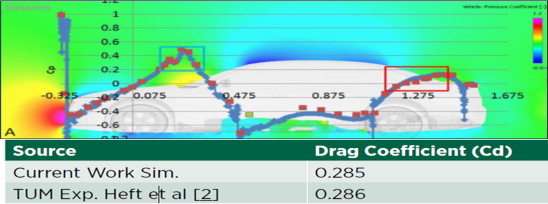
Even in steady-state mode, results for drag are very accurate. Lift results are extremely accurate with the very fast transient solving capabilities.
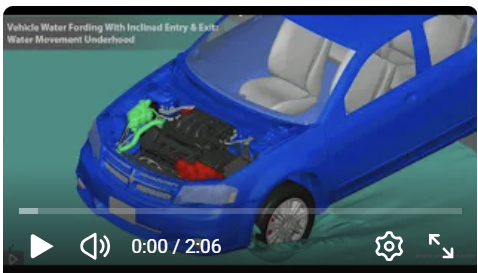
analyses accurately emulate testing for vehicles entering and exiting water at different speeds and water depths. Tire rotation is modelled and dynamic meshing is used to capture the real-world situation. The fast and robust multiphase, free-surface VoF solver captures the wading phenomenon and wave pattern in front of the vehicle accurately using highly validated, very efficient templates.
It predicts wetting of critical electrical/electronic components and water ingested in air induction systems and under-hood components. Set-up and pre-processing are extremely simple and results are very accurate.
studies are very accurate with traditional complexities being greatly simplified as compared to legacy CFD solutions. Modern-day tools and workflows greatly reduce engineering time in pre-processing and meshing. Perform studies with CAD files from multiple formats and with no or minimal geometry clean-up or simplification required, and in a small fraction of time. The very robust, fast and accurate solver and efficient, parallel post-processing deliver very accurate results (1% to 5% of physical test results) in a fraction of the time (1/5th to 1/15th of competing technologies.
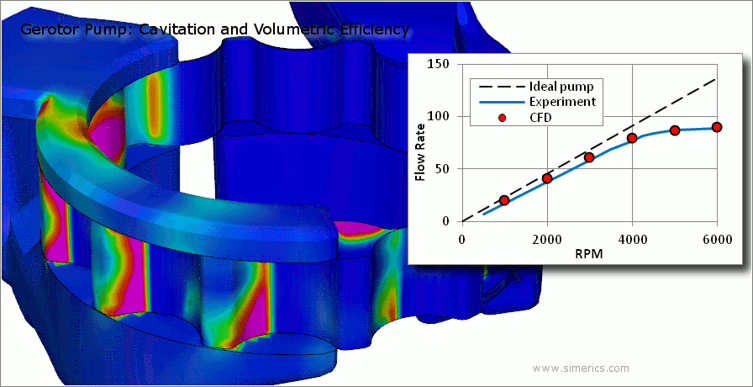
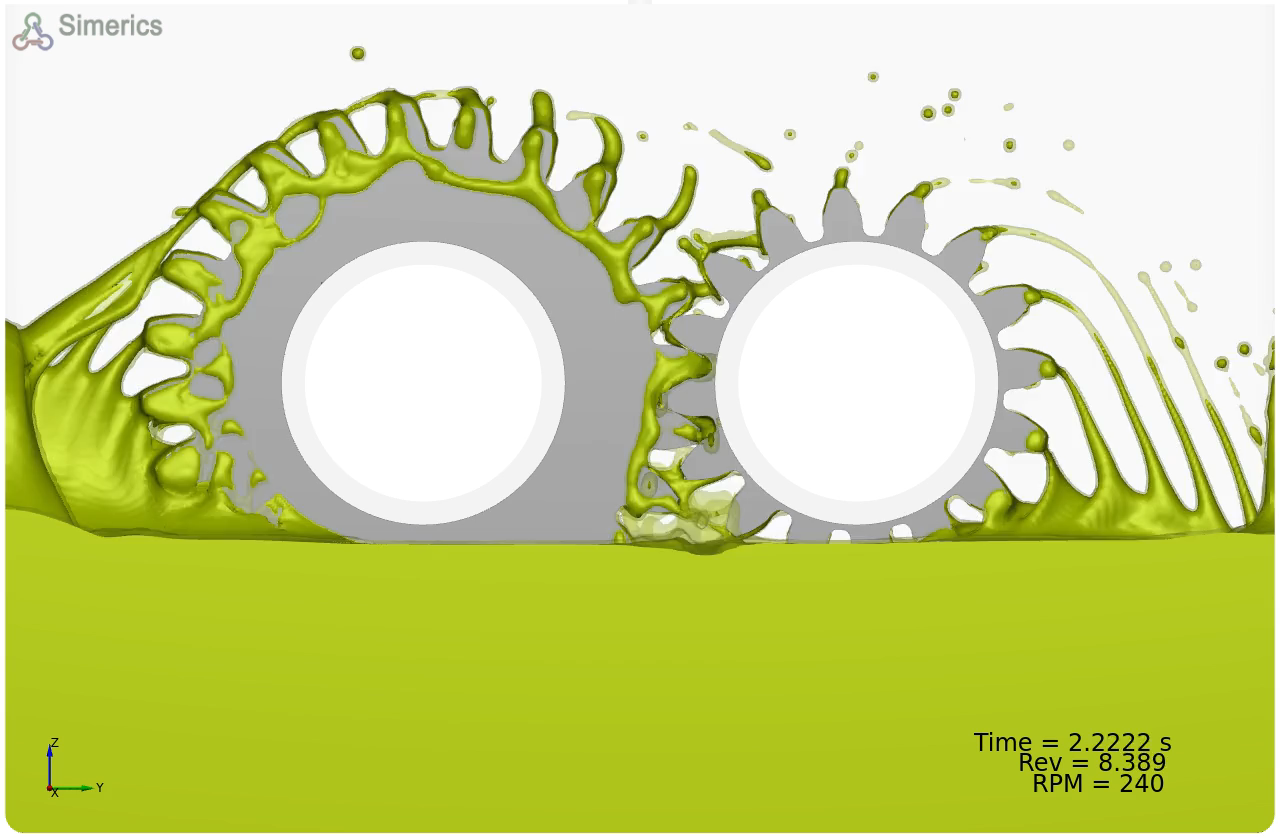
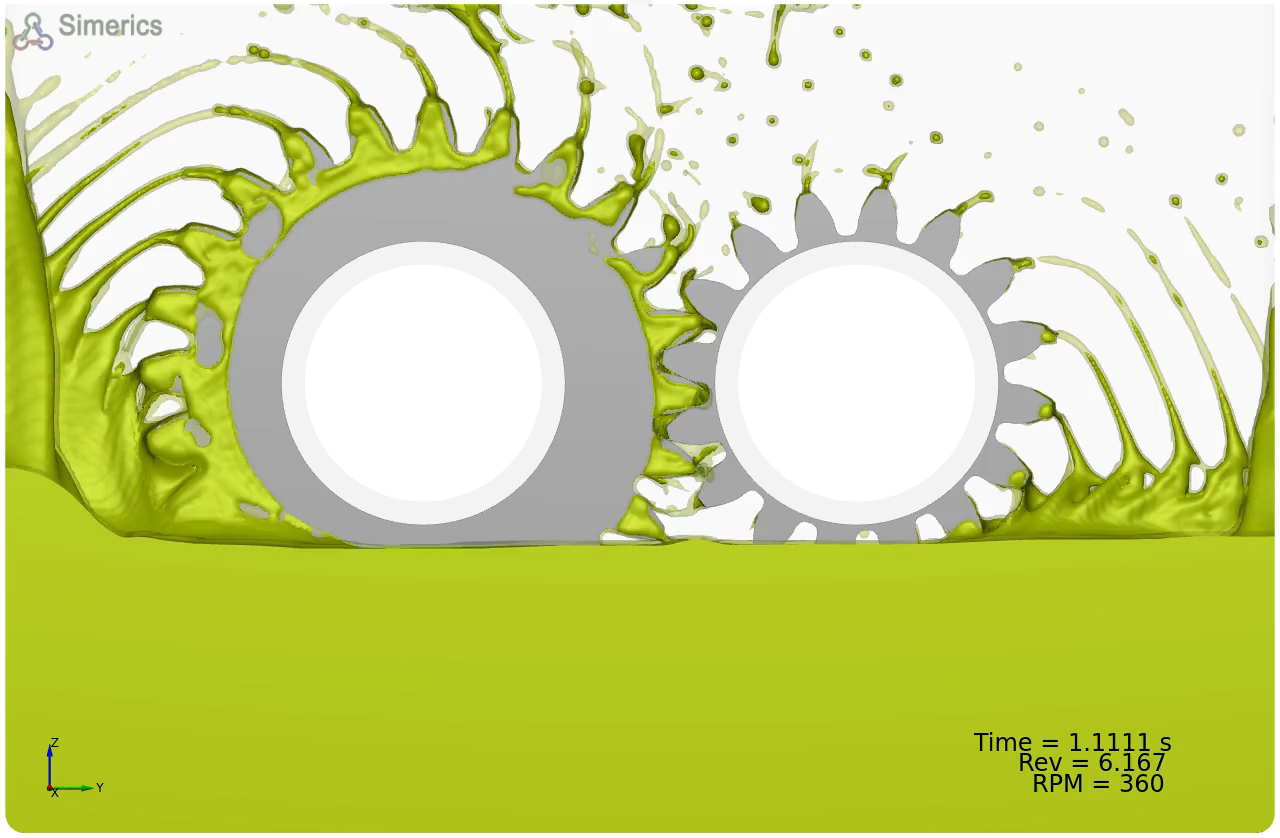
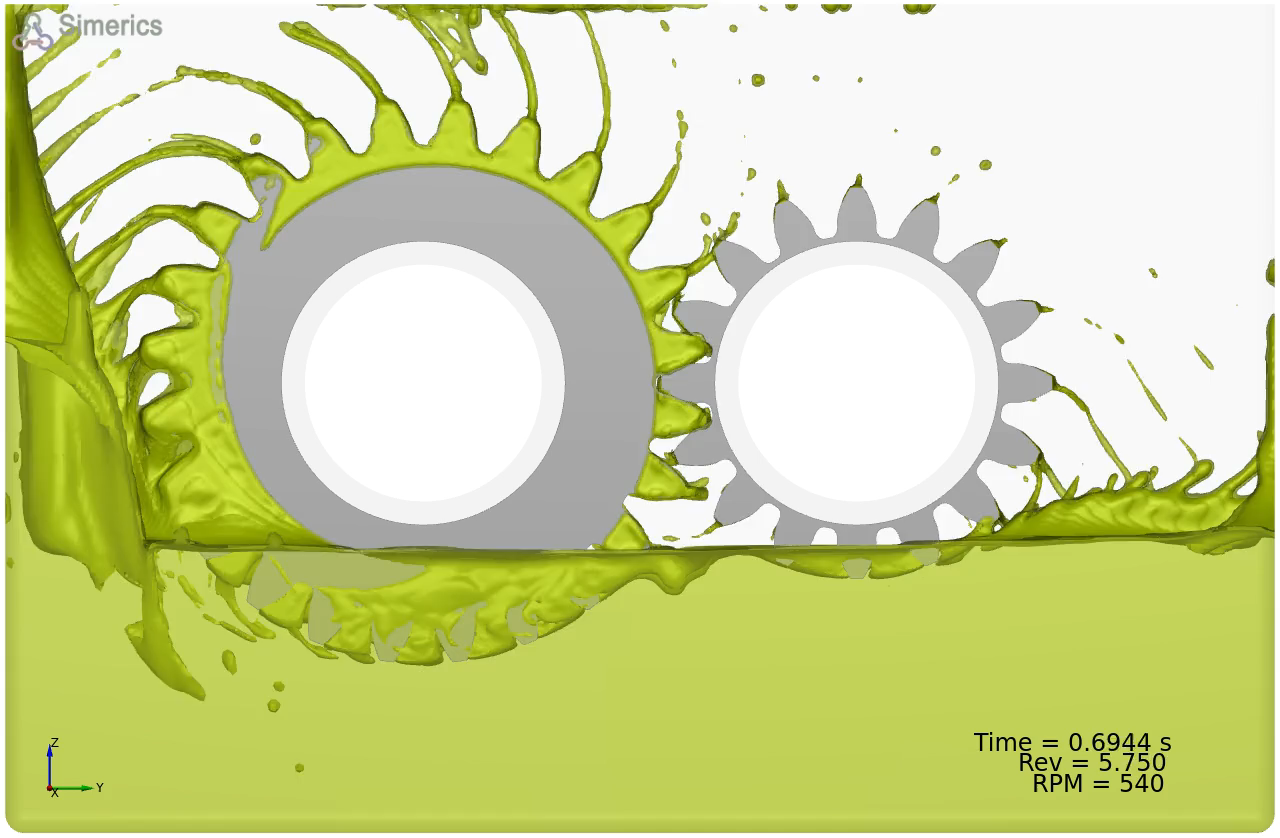
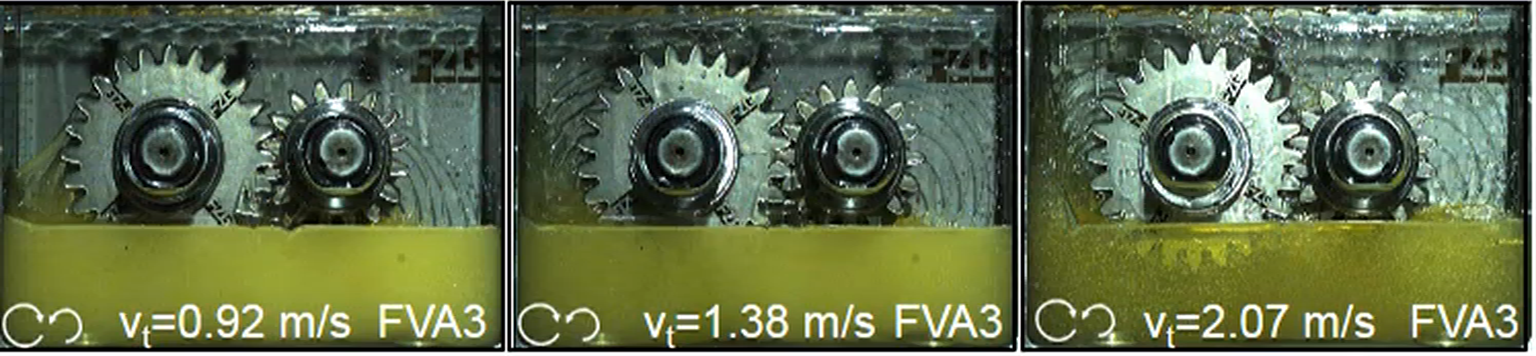
studies deliver unprecedented levels of accuracy and efficiency in study times. Unique, easy-to-use meshing methods allow efficient creation of detailed grids, even for moving components such as gears with tooth meshes and rolling bearings. Large differences in scale between narrow gaps in large components require no simplification. A fast solver specially adapted to the generated grids, optimizes solving times and accuracy, enabling short turnaround times.With coupled fluid dynamics and CHT, Simerics delivers highly accurate predictions of flow, pressure, churning losses, lubrication, cavitation, VoF free surface and thermal/CHT.
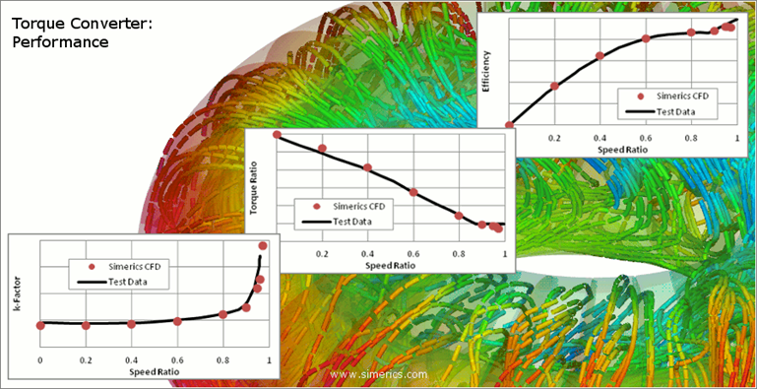
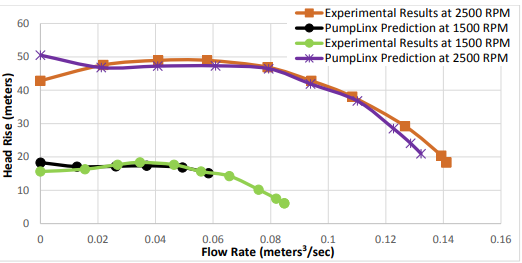
analyses deliver unprecedented levels of accuracy, efficiency and ease-of-use. Already the industry leader in simulating rotating machinery in the Pumps, Compressors and Oil & Gas industries, these Automotive applications are a natural fit.
Extremely well-validated and flexible templates, algorithms, workflows and automations greatly reduce engineering time, effort and hardware requirements, while increasing accuracy. Studies involving complex geometries, minute gaps/clearances and moving/sliding and MRF grids are greatly simplified and highly accurate.
Tank filling/sloshing, fuel systems, component cooling/CHT studies leverage highly efficient multiphase, transient, VoF solving algorithms to produce unmatched accuracy.
Different filling and de-aeration processes can be easily automated to optimize filling strategy. Identify location of trapped air in critical components e.g. radiator, pump, battery pack, engine cooling jacket etc. High speed pump-on filling and multi-directional valve dynamics can be simulated and captured. Set-up is fast and simple and study completions times are very fast.
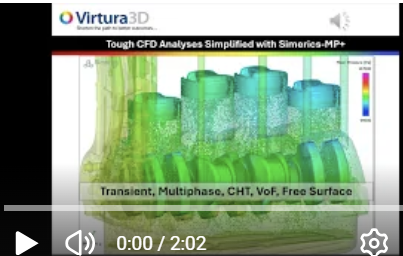
studies accurately predict fluid flow and heat transfer to support engine cooling, lubrication and exhaust system development. Evaluate coolant distribution and component temperatures using coupled flow and conjugate heat transfer (CHT). Analyze exhaust flow patterns, pressure losses and thermal maps.Detailed modelling of complete engine with all oil pathways, motion of pistons, crankshaft, camshafts, PCV valve and timing chain. Predict oil and blow-by gas distribution, oil level in the sump and other engine parts, oil flow rate drawn down from the head, oil filtering rate across the oil filter, blow-by gas and oil flow rate through the PCV system, etc.
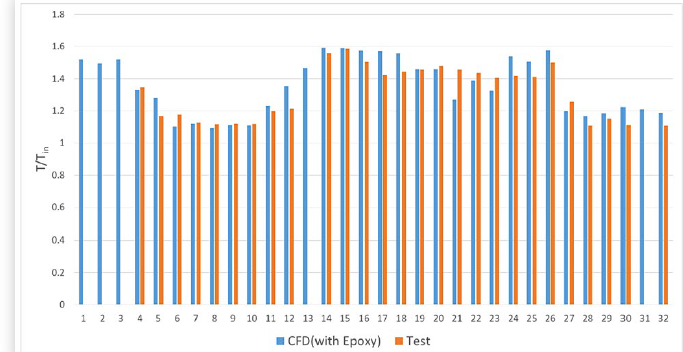
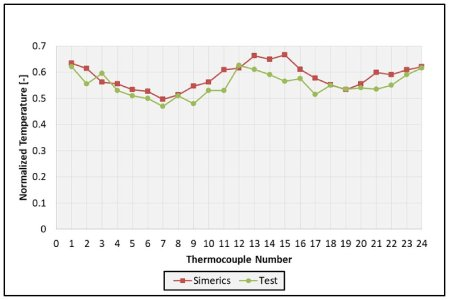
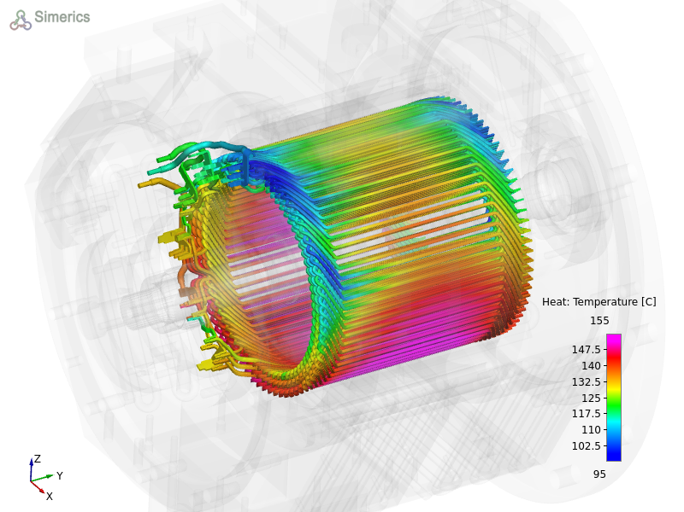
studies identify critical component temperatures early in the development stage and compares different cooling concepts. In e-Motors, compare from classic housing cooling to direct winding cooling. An anti-diffusion VOF process sharply maps the phase boundary between oil and air despite high speeds and strong air turbulence. Battery cooling studies include thermal run-away.
Timescale discrepancies are resolved using mixed-timescale CHT coupling by calculating the fluid and solid sides separately. Both models communicate with each other via thermal boundary conditions.
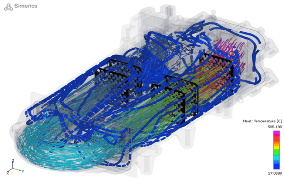
studies utilize unique, intelligent, very well validated algorithms and automation. Airflow and temperature distribution predictions are extremely accurate and highly efficient. Intelligent templates make accurate grid generation very fast and easy for cabin simulation.
Coupled flow and thermal analysis captures conduction, convection and radiation, enabling rapid optimization of air flow and thermal distribution. Automated processes and the high-performance solver significantly reduce modeling effort and convergence times.
“There are many CFD tools to choose from; however, there is no doubt that Simerics-MP+ is the perfect CFD tool for multiple automotive applications. Hyundai successfully uses Simerics-MP+ for the analysis of cavitation and pressure fluctuation in its fluid power systems, and specifically, its pumps and valves. Simerics-MP+ is impressive because it is able to simulate transient fluid dynamic effects for automotive pumps; plus, I am very satisfied with the cavitation modeling capabilities of Simerics-MP+. It is uniquely suited to deal with very small gaps where cavitation can occur. I look forward to utilizing Simerics-MP+ even more in the future as new developments are released.”
“Due to complexities of interaction among gears and crescent-shaped island, a crescent oil pump is one of the most difficult auto components to model using three-dimensional CFD. The present study shows that the proposed computational model is very be used as a reliable crescent pump design tool.”
“A Three-Dimensional Design Tool for Crescent Oil Pumps,” by Yu Jiang, Michal Furmanczyk and Samuel Lowry of Simerics, Inc.and Dengfu Zhang and Chin-Yuan Perng of ATEO, Ford Motor Company, was presented at the 2008 SAE conference in Detroit, Michigan.
“I’m pleased to let you know that CFD engineers in my section at Transmission & Driveline Engineering (TDE), Ford Motor Company have been successfully using the CFD package, Simerics-MP+, developed by your company to support the transmission oil pump design and release. We found that Simerics-MP+ is easy to-use, fast, and very robust in creating pump virtual models to predict the flow performance exhibited in gerotor and vane pumps. The applications of Simerics-MP+ have effectively helped us eliminate many technical bottlenecks and increase our analysis throughput. We are thrilled about the opportunity to support our engineering team to investigate more design alternatives and sort out potential design weaknesses analytically. I can see that in a shorter term, the final design of our pumps will be more robust, the concept decision will be made faster in response to system demands. In a longer term, I expect that we will be able to translate many innovative ideas of pump designs to positive customer perception of the superiority of our vehicles’ NVH quality.”
“Magna Powertrain, Engine Technologies Group, Concord Ontario acquired the simulation software Simerics-MP+ in 2006 to support its oil pump development team whose main responsibility is the design of gerotor and vane pumps. The team has proved that the code provides accurate results with the pre-processing/setting time reduced to as low as two hours using the Simerics-MP+ templates and the automatic mesh generator. Simulations were performed in a short period of time which allowed us to compare three or four design options back-to-back and to make the best possible decision before building the prototypes. Simerics-MP+ was very useful in addressing issues related to cavitation discovered in the first stage design. The cavitation was either eliminated or reduced to a minimum in the second stage design. Overall, Simerics-MP+ has proved to be a very useful, user-friendly tool designed especially for pump designers to help them make the best possible design decisions to meet or exceed the customer expectations..”